
Dubai
Interior design in Dubai: permits and community rules
Much interior work in Dubai needs no building permit. It always needs an accredited contractor, and in a managed community it often needs the developer's approval as well.
Permits first
Does interior design in Dubai need a permit?
Much interior design in Dubai goes ahead without a building permit. What it never goes ahead without is a contractor accredited with Dubai Municipality, and in a managed community, the developer's own approval. Below are the Municipality's three routes, the licence line between decoration and building work, and what four developers publish about interiors.
Which interior works need a Dubai Municipality permit?
Painting, new floors, doors and suspended ceilings are simple maintenance under Circular 3-12-1 of 2022: no permit and no completion certificate. Décor inside a unit of up to 100 square metres needs no building permit under Circular 3-8-1 of 2021. Above 100 square metres the accredited contractor self-issues the décor permit online. Structural change, merging units or adding area is a modifications transaction filed by a consultant. We brief design firms on that split before they quote.
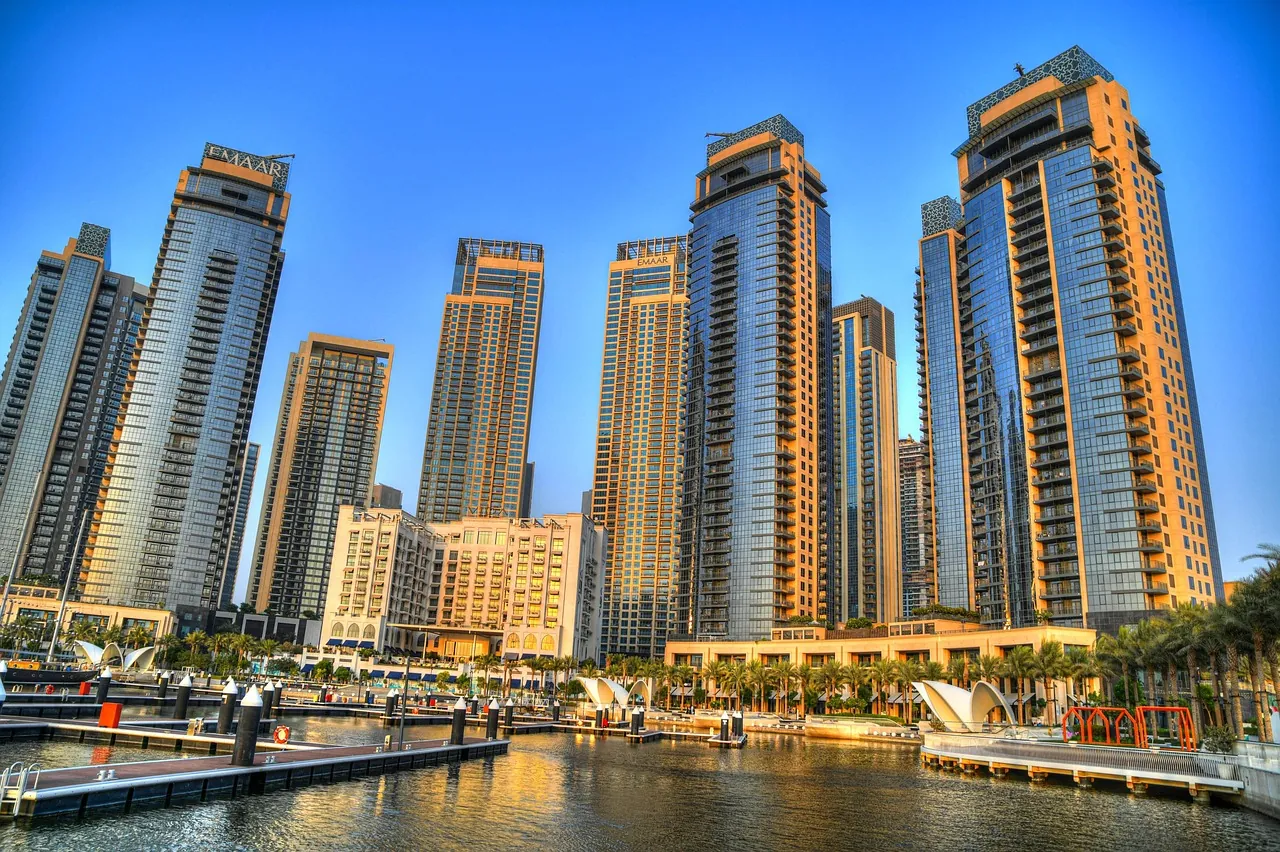
Three Dubai Municipality routes for interior work
| Work | Route | Who files |
|---|---|---|
| Painting, flooring, doors, suspended ceilings | No permit and no completion certificate, Circular 3-12-1 of 2022 | Nobody: an accredited contractor does the work |
| Décor in a unit up to 100 sq m, or any mall unit | No building permit, Circular 3-8-1 of 2021 | Nobody: accredited contractor, owner's approval |
| Décor in a unit over 100 sq m | Self-Permitting for Décor in Dubai BPS, completion certificate issued automatically | The accredited contractor |
| Structural change, units merged, area added | Modifications transaction; DM lists 3 working days for service 4127 | A registered consultant |
The décor route carries conditions of its own. The work stays inside the unit's approved boundaries, adds, removes, merges or splits no built-up area and meets Civil Defence requirements. A tenant also needs the owner's approval. The Municipality keeps the right to audit finished work and to apply penalties where it falls short. Buildings in historical areas have a service of their own, approval of interior design, listed as DM service 2084.
Dubai Development Authority zones run a parallel list. DDA Circular 318 of 2019 names all internal painting, furniture replacement or addition, and flooring that leaves the structure alone among works needing no fit-out permit, on the strength of the landlord's or facilities manager's permit to work. Circular 338 of the same year removes the fit-out permit for units of up to 100 square metres, the same threshold Dubai Municipality uses.
Which authority approves instead of the Municipality, from DMCC in Jumeirah Lakes Towers to Trakhees on PCFC-owned land, is set out job by job in our DM approval guide.
Tell us the unit size and scope
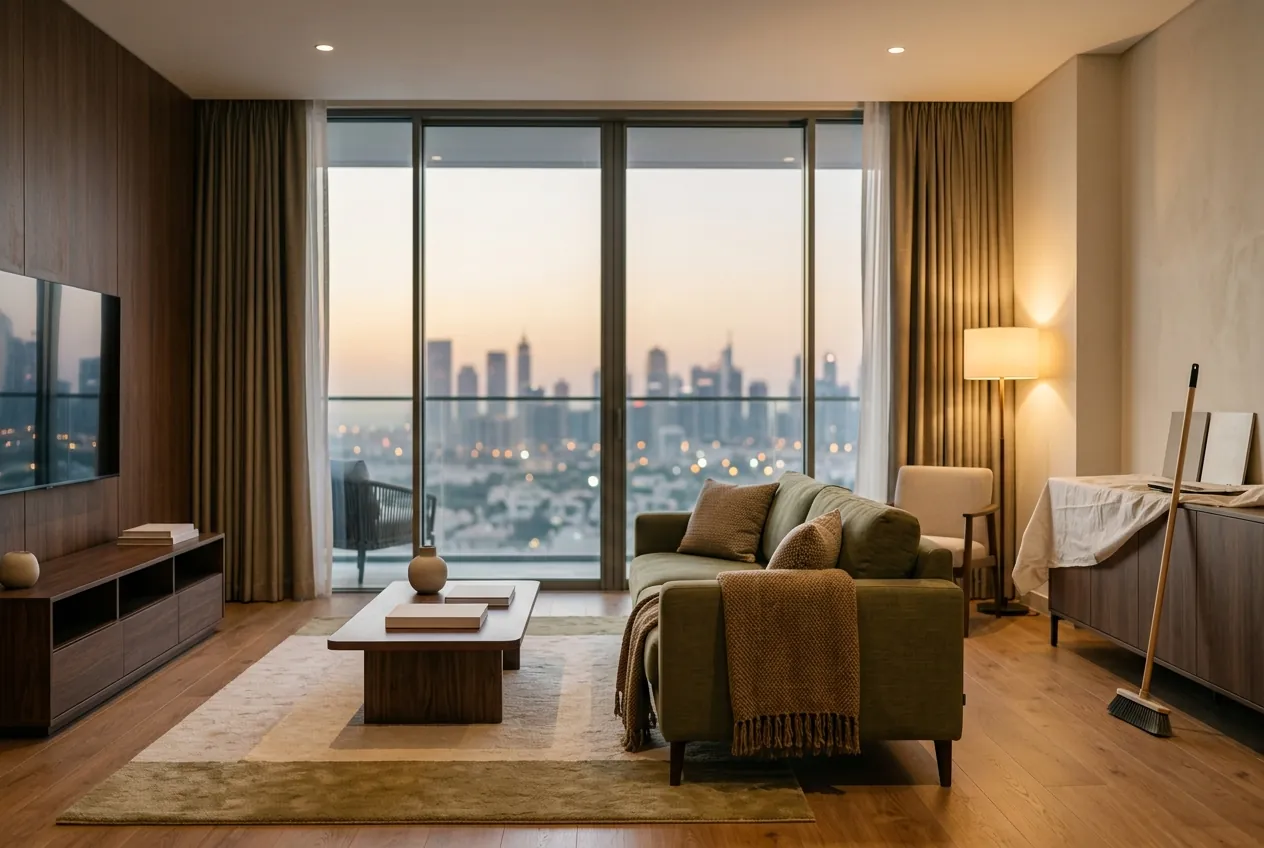
Which licence should the design firm hold?
Dubai licenses contractors in two steps: a trade licence from the emirate's economic department, then registration in Dubai Municipality's register of consultants and contractors. Inside that register, the activity decides what a firm may build. The Municipality's 2024 classification lists Interior Decoration and Decoration Design and Implementation as secondary activities that supplement a main one. Building Contracting is the main activity. It is graded from the fourth category, cleared for ground plus one, to the first, with no height limit, and it carries the right to take building permits directly.
- Decoration only: Interior Decoration (454009) or Decoration Design and Implementation (100051). Finishes, joinery, ceilings and décor, under Municipality accreditation.
- Building work: Building Contracting (452001). Walls, openings and structure, with a graded category.
- Design and build: the Municipality runs a separate qualification and registration route for design-and-build contractors under Circular 224.
- Before you sign: search the firm in the Dubai BPS app or on the Municipality's corporate practice permit portal.
Developer rules in Emaar, Nakheel, Town Square and Tilal Al Ghaf
The Municipality sets the floor. In a managed community the developer adds its own approval, and the four that publish their rules draw the interior line in different places.
Emaar communities
Emaar's home modifications factsheet asks no NOC for internal painting, furniture installations, electrical fixtures and accessories, or regular maintenance, though every contractor still needs an entry permit through ecmpermits.ae. Minor and major works go through the Home Modifications portal. Emaar's 2022 schedule charges AED 1,000 or AED 2,000 to approve, with the AED 500 review fee deducted from that total, and a decision within 3 business days of a complete file. Apartment owners face three limits a designer has to plan around: no removal of walls, no removal of existing tiles (new tiles can be laid over them), and no moving or covering of MEP and firefighting systems.
Nakheel communities
Nakheel's 2023 villa design codes for Palm Jumeirah, Jumeirah Park, Jumeirah Islands, JVT, Al Furjan and Nad Al Sheba Villas listed internal paint, wallpaper and decoration among works that needed no NOC, along with kitchen and bathroom refurbishment that left the wall layout alone and the replacement of cabinets, wardrobes and furniture. A gate pass is still required. Dubai Holding Community Management's 2026 rulebook, which now governs those communities, adds a Minor Modifications Permit for any work lasting more than a day, valid for up to seven days.
Town Square
Nshama's Town Square manual publishes its alteration tiers in full, with fees. Home improvements cost AED 160 and include interior repainting and wallpaper, interior wall cladding, interior lighting and storage shelves. Minor works cost AED 1,000 and cover new kitchen cabinets, wardrobes and doors, and tiles laid over existing ones. Major works cost AED 2,000 plus a AED 5,000 deposit and include false ceilings, new floor tiles and opening interior walls. Apartments may not remove or replace floor tiles at all; new tiles go on top, except on balconies. The desk states 2 working days for minor approvals and 5 for major ones.
Tilal Al Ghaf
Majid Al Futtaim's rules for Tilal Al Ghaf reach further into the interior than most. Written consent is needed just to alter or replace floor coverings, and mezzanine levels or false ceilings used as storage need express written approval. Owners give 48 hours' written notice before any work, name the contractors and obtain a work permit, and the review of alteration plans costs AED 5,000 plus AED 250 VAT. Its master declaration lists Dubai Municipality, not Trakhees or the DDA, among the authorities it answers to.
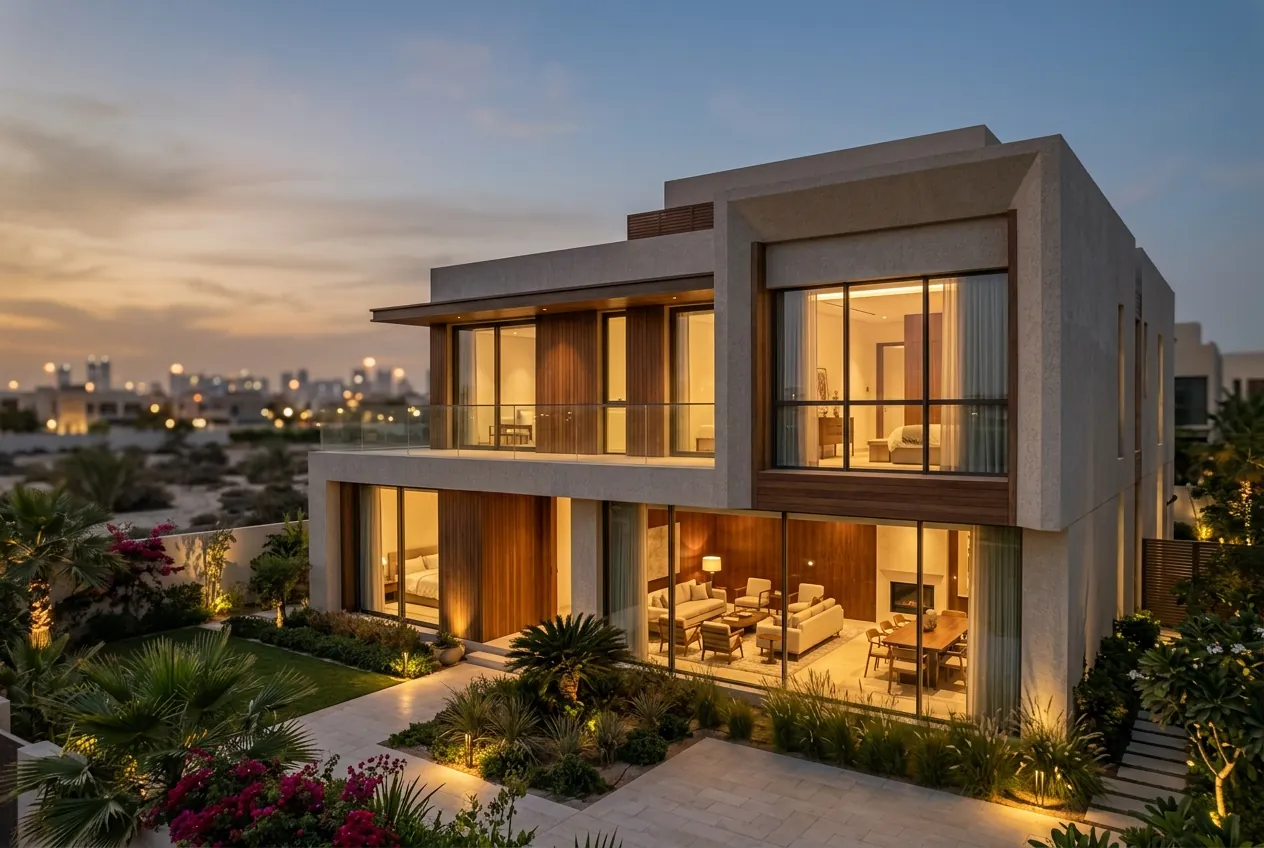
What does interior design in Dubai cost?
The bands on our price guide are Dubai figures. Design-only fees are published at 10 to 20 percent of the project value, or from AED 120 per square metre for villas of 1,000 square metres or more. A studio design package starts near AED 10,000, and design and build for part of a villa near AED 80,000. Community approval fees sit on top of those, from AED 160 in Town Square to AED 5,000 plus VAT in Tilal Al Ghaf.
Cross the border and the permit changes shape. Abu Dhabi splits the same work between a maintenance permit the contractor files and a building permit only a design consultant can file, as the Abu Dhabi permits page explains. For the firms themselves, our interior design Dubai page sets out how we brief them on one written scope.
Questions
Dubai interior questions, answered from the rules
- Can I paint and change the floors in my Dubai apartment without a permit?
- From Dubai Municipality, yes: both count as simple maintenance under Circular 3-12-1 of 2022, provided an accredited contractor does the work. Your building may still say no. Emaar does not allow existing tiles to be removed in its apartments, and Town Square allows new tiles only on top of the old ones.
- Who files the décor permit for a unit over 100 square metres?
- The contractor, not you. Circular 3-8-1 of 2021 lets a Municipality-accredited contractor apply through the Self-Permitting for Décor service in Dubai BPS without a review by Municipality engineers, and the completion certificate is issued automatically once the work conforms. The Municipality can still audit the result afterwards.
- Does my interior design firm need a Dubai Municipality registration?
- The firm that carries out the work does. Contracting companies need a trade licence and a place on Dubai Municipality's register of consultants and contractors, and the activity on that registration sets the scope: decoration activities for finishes and décor, Building Contracting for walls and structure. Ask which firm will hold the accreditation for your job, and check that firm.
- Do I need Emaar's approval for new furniture or paint?
- No NOC is needed for internal painting, furniture installations, electrical fixtures and accessories, or regular maintenance, according to Emaar's home modifications factsheet. Every contractor still needs an entry permit, applied for at ecmpermits.ae, even when no NOC is required.
- What counts as major work in Town Square?
- False ceilings, new floor tiles in wet areas, dry areas and balconies, opening or removing interior walls, new kitchen counters or islands, and swapping a bathtub for a shower, among others. Major works cost AED 2,000 plus a AED 5,000 deposit, and Nshama's manual sets a AED 50,000 penalty for carrying them out without approval.
- Can I add a false ceiling in Tilal Al Ghaf?
- The rules single out false ceilings used as storage areas, which need express written approval, as do mezzanine levels. Even replacing floor coverings needs written consent there, and every job needs 48 hours' written notice, named contractors and a work permit before it starts.
- When can interior work run in Nakheel and Dubai Properties communities?
- Under the 2026 Dubai Holding Community Management rulebook, minor works run Monday to Saturday from 8 AM to 6 PM, with noisy work limited to 9 AM to 1 PM and 3 PM to 5 PM, and nothing on Sundays or public holidays except emergencies. Requests go in through the community app at least 24 hours ahead, or 72 hours ahead by email.
- Can a villa annex be used as a majlis in Dubai?
- Yes. The 2021 Dubai Building Code lists a majlis among the permitted uses of a villa annex and lets the annex sit on the plot boundary, provided it is at least 1.5 metres from the main villa, no more than 5.5 metres high and no larger than 60 percent of the main building's gross area. Your plot's affection plan and your community's rules still apply.
- Is interior design priced differently from one Dubai community to the next?
- The design fee is not published per community, but the approval around it is. Town Square charges AED 160 for interior repainting or wallpaper, Emaar AED 500 to review a modification, deducted from its approval fee, and Tilal Al Ghaf AED 5,000 plus VAT to review alteration plans.
Who you are dealing with
- OperatorWebsiteOS LLC
- Licence2646567.01
- Cost to homeownerNone
- Figures datedSeptember 2026
Tell us about the space
Rooms, floor area, community and what you want designed. We come back with design firms and contractors who quote against the published bands, and show you where each quote sits against them.